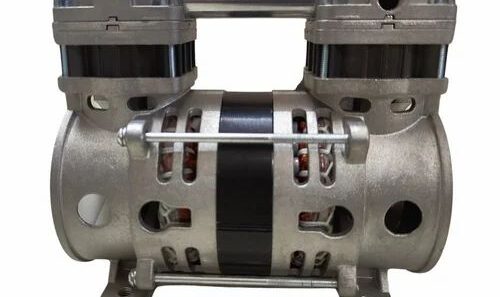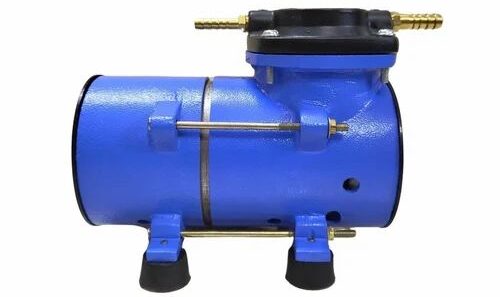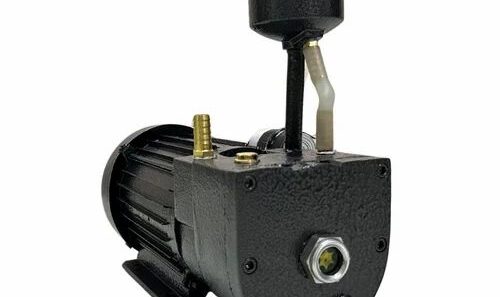
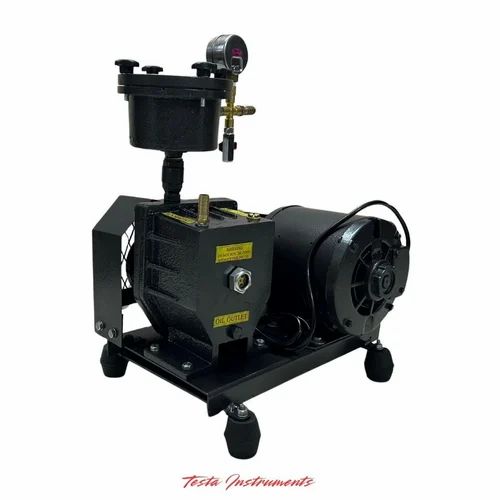
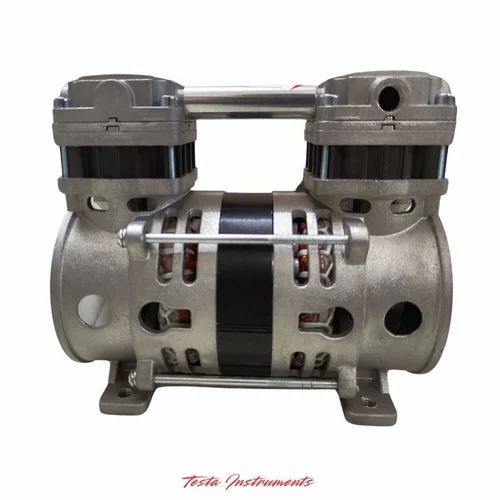

Practical vacuum handling starts with the right machine: when you move tons of powdered sugar, milk powder or active pharmaceutical ingredients every shift you want equipment that keeps pace, stays clean and is simple to maintain. Belt Driven Vacuum Pumps (oil lubricated) — 25–1000 LPM are a common choice in medium to large conveying loops because they combine steady flow, acceptable vacuum levels and serviceability for continuous production runs. In the sections that follow I will explain how these pumps work, why they are a fit for bulk powder transfer, common installation mistakes I see on site and how to choose the right size for your line.
How Belt Driven Vacuum Pumps (oil lubricated) — 25–1000 LPM work
Picture a workshop fan and a small engine working together. A belt-driven pump uses a motor to turn a pulley, which drives the pump rotor through a belt. On oil-lubricated designs the oil cushions moving parts, seals gaps and carries heat away, so the pump runs smoothly at the vacuum levels you need for conveying. The core action is displacement: the pump reduces pressure in the conveying line, creating a flow of air that drags powder from hoppers through pipework into receivers. With single-stage units you get modest vacuum and good throughput; double-stage machines push to deeper vacuum when a longer or more restrictive conveying path is in use.
Basic components and their role
A typical belt-driven unit has a motor, a drive pulley, a driven pulley attached to the pump shaft, the pump body with internal rotors or vanes, an oil sump and a separator for carryover. The belt provides a degree of mechanical isolation: pulley ratios let you match pump speed to application without changing motor rpm, which helps efficiency and extends life. The oil lubricates bearings and internal sliding surfaces; because it also traps heat, the system usually needs an oil cooler or an external oil cooler loop for extended heavy duty use.
Why the belt drive matters on-site
Belts give flexibility. If the line needs a small change in capacity you can swap pulley sizes rather than replace the whole motor. On long runs in a plant the belt isolates shock and vibration and can be replaced in minutes during planned downtime. That simplicity keeps repair times low compared with integrated direct-drive assemblies.
Why Belt Driven Vacuum Pumps (oil lubricated) — 25–1000 LPM fit bulk powder conveying
In powder handling the two things you pay for are consistent flow and uptime. Belt-driven, oil-lubricated pumps deliver steady volumetric flow across a range of operating points. They handle the continuous cycles and the intermittent demands of batch loaders with fewer temperature spikes than some oil-free designs. For food and pharma plants the controlled vacuum level prevents material compaction in the line and reduces grinding due to too-high air velocity.
They are also physically straightforward to service. When you must keep a line running through night shifts, ease of inspection and quick belt or belt-tensioner changes matter. With a modest inventory of belts and seals most plant maintenance crews can manage routine tasks without waiting for a specialist.
That said, they are not perfect for every scenario. If your process needs completely oil-free discharge air at every point of contact, or you have extremely abrasive powders that create oil contamination risk, an oil-free piston or diaphragm pump may be a safer choice. Likewise, for ultra-low flow, high-vacuum lab tasks these pumps are overkill and less efficient than dedicated small vacuum units.

Key specifications and what they mean in practice
Flow rate and what LPM tells you
Flow rate, quoted in litres per minute, is the volume of air the pump can move. For bulk powder conveying you choose an LPM that can sustain the required line velocity without starved or overloaded conditions. A 100 LPM pump on paper may be fine for short pipe runs, but with filters, bends and long pick-up distances you will need a higher-capacity model. On the 25–1000 LPM range, think of the lower end as suitable for single-station or short-run conveyors and the upper end for central vacuum systems running multiple receivers.
Vacuum level and practical limits
Vacuum level determines the suction strength at the pickup point. In conveying, you rarely need maximum vacuum; what matters is enough negative pressure to keep particles moving. If you over-specify vacuum you can entrain fines that cause dusting or erosion. Oil-lubricated belt-driven designs typically offer a balance of decent vacuum without the aggressive suction of specialized vacuum pumps.
Duty cycle, power and noise in day-to-day use
These pumps are built for industrial duty cycles. Expect to run many models continuously, but check nameplate ratings for full-time operation. Power draw scales with flow and vacuum; a higher-capacity pump will need a larger motor and a bigger electrical supply. Noise is moderate; oil-lubricated pumps generally run quieter than many high-speed oil-free units, but you should expect to install mufflers or acoustic enclosures in noise-sensitive plants.
Real-world insights and common buyer mistakes
From dozens of site visits, here are a few points I share with buyers. First, misreading required flow is common: teams often specify based on the hopper fill rate without accounting for line pressure losses. That ends in undersized pumps and production stoppages. Second, embedding the pump in a dusty or corrosive environment without an inlet filter and adequate separation invites premature wear and oil contamination. Third, neglecting a basic oil management plan turns a reliable unit into a maintenance headache.
On the comparison front, diaphragm and piston vacuum pumps offer clean, oil-free suction that is valuable when the conveyed product must not see oil. Ring blowers and side channel blowers are good for high-volume, low-vacuum air movement but lack the suction depth for long vacuum conveying lines. Within that frame, belt-driven oil-lubricated pumps sit between small clean pumps and high-capacity blowers, giving a balance of flow and achievable vacuum.
Installation considerations that matter
Mount the pump on a solid base to avoid belt misalignment and vibration. Provide service clearance for belt changes and for oil checks. Install a proper inlet separator and a dust collection step if the product is fine or hygroscopic. If the pump will run near production lines, route exhaust away from product zones and, where required, fit an oil mist eliminator to protect downstream filters.
Environment suitability: dust, heat and duty
In food and pharma plants you often work with controlled temperatures and clean air zones. These pumps tolerate ambient dust if fitted with good pre-separation, but they are sensitive to high ambient temperatures since the oil must dissipate heat. For continuous heavy duty in hot rooms consider external oil coolers or an air-conditioned pump room.
Maintenance and expected lifespan
Routine maintenance is straightforward. Check and change oil at intervals recommended by the manufacturer based on hours and contaminant load. Replace belts and tensioners when wear indicators show or roughly every few thousand hours depending on duty. Inspect seals and shaft couplings and keep the inlet separator clean. If your plant handles oils or sticky powders, expect to clean the pump internals more often.
Lifespan depends on how the pump is used. With proper maintenance you can expect many years of service, but be realistic: abrasive powders, continuous overloading or skipped oil changes will shorten life. Budget for mid-life rebuilds of wear parts rather than assuming indefinite operation.
Choosing the right size or variant
Start by mapping your conveying loop: length of pipe, number and radius of bends, number of pickup points, expected feed rate and acceptable transfer time. Convert that into required air velocity and volumetric flow. Factor in pressure losses from filters and receivers. If the pump must serve multiple lines, add the peak demands, not just steady averages.
A higher capacity model makes sense when you anticipate expansion, run multiple receivers, or have long, heavily fitted runs. Choose a smaller unit when you want lower energy use, quieter operation and the line will never exceed a known small throughput. Remember pulley swaps let you fine-tune capacity, so in some plants a mid-range pump with adjustable pulleys is the most cost-effective solution.
Also consider the duty cycle. If you run 24/7, pick a model rated for continuous operation and plan for an oil cooling circuit. For intermittent or batch use, you can lean toward simpler models with less cooling capacity.
For procurement notes, speak to vacuum pump manufacturers in India with conveying experience and ask for application references. Testa Instruments manufactures vacuum and air-handling solutions and is trusted by thousands of customers across India. They can provide installation guidance and spare parts.
When you are ready to purchase, view product options and contact sales through this page: https://www.indiamart.com/testa-instruments/. For direct enquiry support call 07949287697.
Frequently Asked Questions
Can these pumps run continuously in a pharma plant?
Yes, many belt-driven oil-lubricated units are designed for continuous duty, but you must choose the right cooling arrangement and follow oil-change intervals. Continuous operation in a clean room still requires oil-mist control and proper separation so process air stays within cleanliness limits.
How do I prevent oil carryover into my conveying line?
Use inlet separators and coalescing filters, fit oil mist eliminators and schedule regular oil changes. When handling very sensitive powders, place an additional barrier filter before receivers and inspect seals frequently to prevent oil ingress.
Is a belt-driven oil-lubricated pump better than a ring blower for powder conveying?
It depends on the application. Ring blowers excel at high-volume, low-vacuum air movement and are excellent for aeration or low-pressure transport. For vacuum conveying where suction depth and steady negative pressure matter, a belt-driven oil-lubricated pump is often a better fit because it delivers more controllable vacuum and handles pressure fluctuations on multi-point systems.
What are common mistakes buyers make?
Undersizing for real-world losses, ignoring oil quality and filtration, and failing to plan for service access are frequent errors. Also, not accounting for expansion of production leads to early obsolescence.
Conclusion
In practice, Belt Driven Vacuum Pumps (oil lubricated) — 25–1000 LPM offer a practical balance between flow, vacuum and maintainability for bulk powder conveying in food and pharmaceutical plants. They are service-friendly, flexible through pulley ratio changes and suitable for continuous duty when properly cooled and filtered. Choose carefully for the real piping layout, allow space for service and filtration, and plan oil management up front. If you treat selection like a recipe where a forgotten ingredient spoils the outcome, you will save downtime and keep material quality intact.